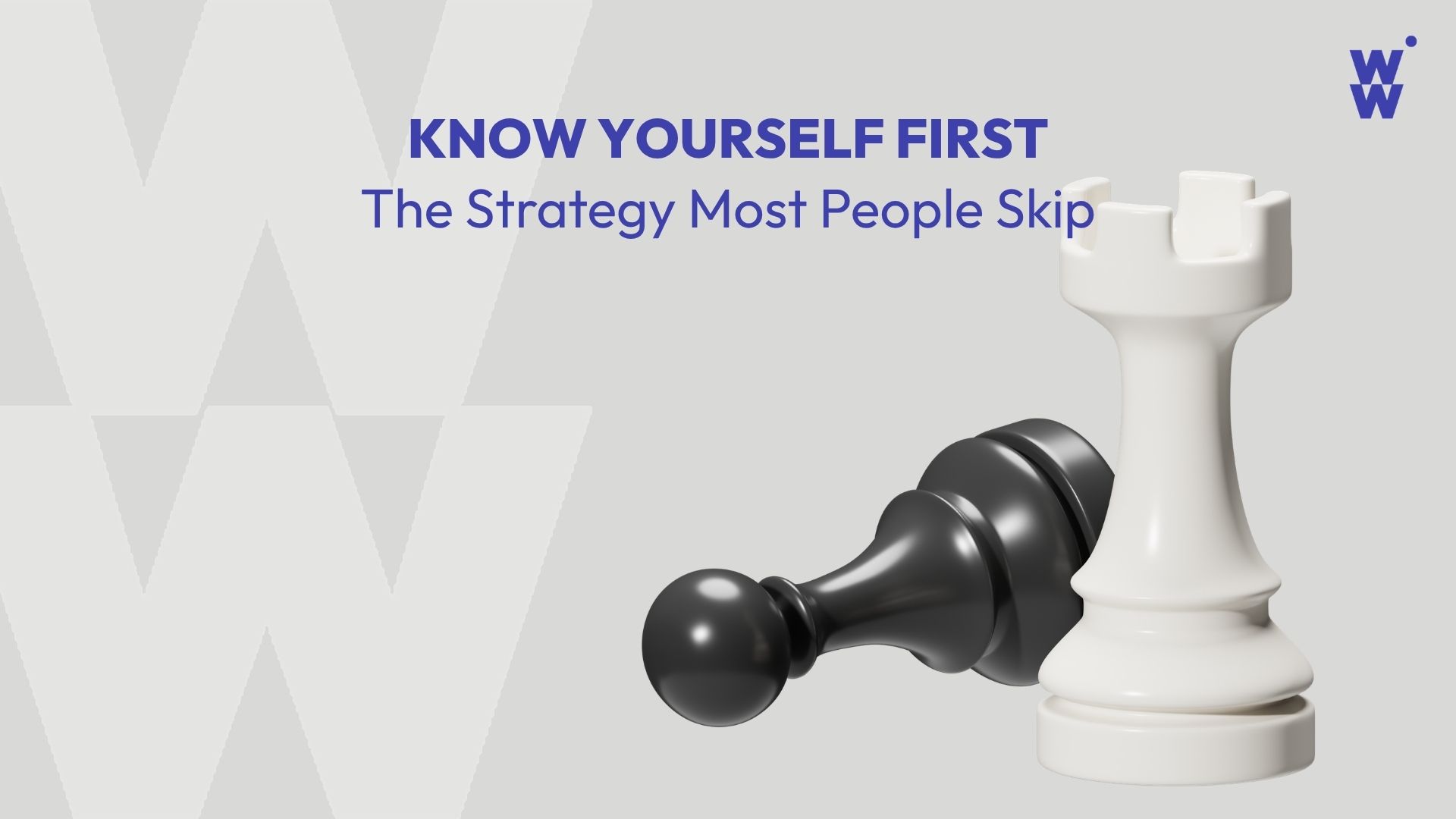
Everyone loves quoting Sun Tzu. Fewer people actually do what he says.
"If you know the enemy and know yourself, you need not fear the result of a hundred battles."
That line gets pulled out in boardrooms, sales kickoffs, and LinkedIn posts every day. But notice something: most of us only take half of it seriously. We study the competition obsessively. We track their pricing, their product launches, their messaging. We know the enemy cold.
And then we skip the other half of the sentence entirely.
The Half Everyone Skips
Knowing yourself is harder than knowing your competitor. Your competitor's moves are visible — you can watch them from the outside. Your own strengths and blind spots live somewhere you can't easily see: inside your own head, wrapped in years of habit and self-story.
That's exactly why it gets neglected. It's uncomfortable. It's slow. It doesn't show up on a competitive analysis slide.
But the data on this should stop you in your tracks. Roughly 95% of people believe they're self-aware. The actual number who genuinely are? Somewhere between 10 and 15%.
That gap isn't a rounding error. It's a leadership crisis hiding in plain sight. And the consequences are measurable: teams led by people with low self-awareness see success rates cut roughly in half, along with higher stress and higher turnover. Not knowing yourself doesn't just limit you—it drags down everyone standing next to you.
Where This Shows Up
In business. When a company doesn't have a clear, honest read on its own strengths, it tends to do the same thing an unprepared general does: watch the competitor and copy their moves. That's how you end up in a price war—a fight where you're matching someone else's strategy instead of playing to your own advantage. Price wars are rarely won by the company that started them. They're won by the company that understood, ahead of time, what it could actually sustain and what it couldn't.
In careers. The personal version of this is quieter but just as costly. People choose a path because it looked good on someone else, or because it's what everyone in their circle was doing, without ever checking whether that path fits their own wiring. You can spend a decade climbing a ladder that was never leaning against your wall.
In leadership. A leader who doesn't know their own strengths tends to lead the way they were led, or the way some management book told them to, rather than the way that actually fits how they think and operate. That mismatch is exhausting to sustain, and people can feel it — You Can't Own What You Don't Understand.
Sun Tzu wasn't writing a career guide, but the principle transfers cleanly: strategy without self-knowledge is just guessing with confidence.
Three Ways to Get There Faster
- Separate feelings from evidence. Write down what you believe you're good at. Then, separately, write down your actual, tangible results from the last 12 months. Not intentions—outcomes. Where those two lists disagree, pay attention. That gap is where your self-perception and your reality have quietly drifted apart.
- Ask people who'll tell you the truth. Self-reflection alone won't get you there, because you're a biased narrator of your own story—everyone is. Ask two or three people who know your work well, and who you trust to be honest rather than nice, what they see as your standout strength and your biggest blind spot. Most people are stunned by how consistent the answers are and how different they are from what they'd guessed.
- Use CliftonStrengths®. It names the talents you use so automatically that you've stopped noticing them as talents at all. The things you assume "everyone can do," because they're effortless for you, are usually the first hidden strengths worth surfacing. That's the real value: not a personality label, but a mirror that's more honest than the one in your head.
Winning Before the Fight Starts
Sun Tzu's real point was never about clever battlefield tactics. It was this: the general who wins is usually the one who never had to fight, because the outcome was already decided by preparation. "The supreme art of war is to subdue the enemy without fighting."
The modern version of that is just as true. The advantage isn't found by out-competing everyone else in the room. It's found earlier—in the quiet, unglamorous work of understanding exactly what you bring that no one else does, before you ever walk into the room.
Know the competition. Fine. But know yourself first. That's the battle most people never actually fight—and the one that decides all the others.
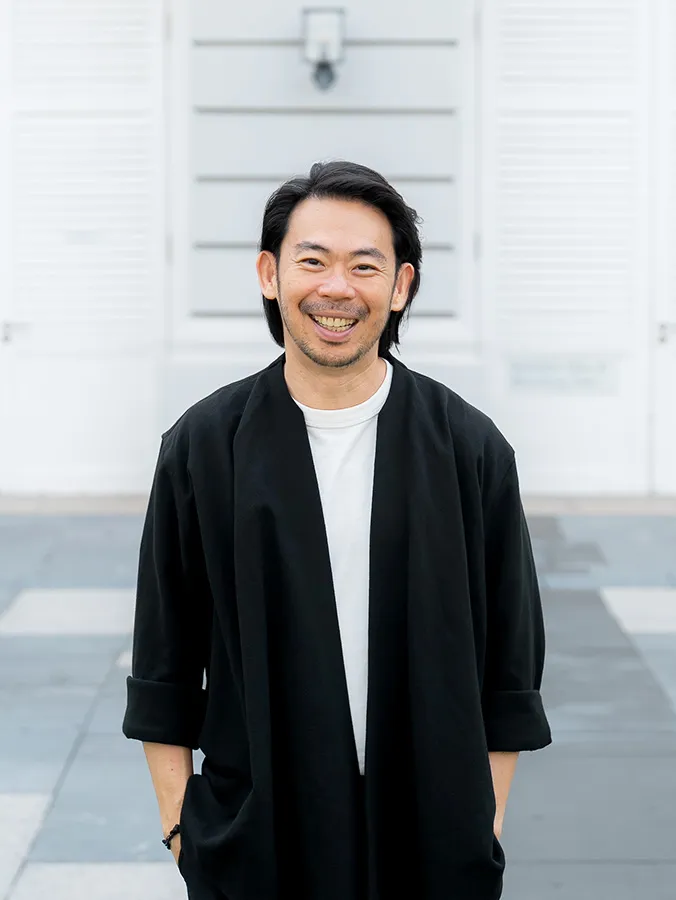
I’m the Founder and Managing Director of Wild & Wise, a strengths-based leadership development practice working with senior leaders and MNCs across APAC. I am also the co-founder of Future.Pro, where we work with senior leaders and MNCs across APAC on a future-ready workforce. If this resonates, follow along or reach out.
About the Author