
A little red dot that many say punches above its size. A little island whose independence is younger than my mum. We are planned. We are measured. We plan far. We love food. We adore processes. We love efficiency. We want to be the best. We can't help but sometimes compare, so we can be better. We need to know where we stand.
We may be known to be in a 'bubble'. Our transportation is reliable. Marina Bay Sands, Changi International Airport and many other crown jewels of this Republic are icons of our success. Singapore is safe and, some say, a little 'sterile'. Things here work.
I am a proud Singaporean. Though I've lived in Toronto, Melbourne and Shanghai across a decade collectively, Singapore will always be home.
With all that economic achievement and financial prowess, Singapore's employee engagement levels remain persistently low.
Only 14% of its workforce is engaged. This is well below the regional figure of 25% in Southeast Asia and the global mean of 20%. To make this fact strikingly outstanding, Singapore's engagement has stagnated at or near its current level since 2019.
Gallup's own research points to four shifts every organisation here needs to make. Build real manager capability, not just promote your best doer into the role and hope. Close the gap between the values on the wall and what people actually experience day to day. Move HR out of admin and compliance and into the strategy conversation, where it belongs. And maximise talent density, which really just means helping every person use what they're naturally good at, regardless of age or tenure.
All four of those start in the same place. The person in the mirror. The Leader. The Manager.
Having led teams across different industries, markets, geographies, generations and cultures, the data is no surprise. Through the many conversations with professionals and teams, you get a sense. Question is, what can we do about it?
Be Human First.
No one taught me what it meant to be a leader in the corporate world. I got promoted primarily because I planned well. I got sh*t done. I drove momentum. Almost zero guidance on how to lead.
I learnt through the role models I had. Through teachers, leaders I respected and admired, and also through leaders that utterly disgust me (it's strong language but I'm already holding back), and to that special group, I promised myself to never ever be like them.
"I learnt leadership through observation. More specifically, how anchored leaders rooted in values translated that into behaviours that positively impacted others."
I learnt that while capabilities matter, if you are not human first, you can't lead. I learnt that capability can also be borrowed from others. If you don't know how to do something well, get someone who can show you how.
Before capabilities, let's start with something basic. Be human. As the team at Strengths School™ aptly puts it, leaders 'Move People to Move Mountains'.
A good leader is self aware and people oriented first. Couple that with high competency, clarity and high standards, you're already getting somewhere.
Define How You Operate. Your Values. Underlined by Integrity.
The worst kind of leader is an extremely unaware one. One who is constantly reacting. Unfocused, scattered, a mind that is all over. One who is 'always busy' and 'has no time'. One who leads by authority, not influence.
Whenever I hear comments like this, what comes to mind is an 'un-anchored' leader. A leader who displays behaviour that's inconsistent daily, with little clarity on how they should behave, how decisions should be made, and little accountability, so chaos ensues.
"An un-anchored leader creates a very nervous organisation."
This is where integrity has to enter the conversation, because values mean nothing without it.
In one of my most recent corporate roles, I watched leaders who cared more about the fancy package, the beautiful homes, the luxury hotels, and the polished life that came with the title than the business they were supposed to be running. Every decision got run through one filter first. Does this protect me and the small circle around me. The business came second. (eg: Leaders telling me not to do the deal because it was too 'complicated' - we did it anyways and it was one of the biggest and most successful programs in the region). The people came a distant third.
You can spot these leaders quickly once you know what to look for. They're generous with credit when things go well and nowhere to be found when things don't. They build a circle of people who tell them what they want to hear, and they mistake that comfort for loyalty. They talk about the team constantly and disappear the moment the team actually needs them to take a hit on their behalf.
Values tell you what someone prioritises and cares about. Integrity is whether they actually live by that when it costs them something. The test isn't what someone says at the town hall. It's what they protect when protecting it isn't free.
Without it, the values statement is just good branding.
"You can't coach what you don't understand. And you can't understand your team until you've done the work of understanding yourself first. Most managers have never been taught either."
Build a Founder Mindset.
For a long time I thought being a strong leader meant knowing everything myself. I was wrong. The best thing I ever did was learn to see what each person on my team was actually good at, and get out of their way.
Here's what nobody tells you as you grow. The work changes. What used to keep you busy, the doing, the fixing, the being the smartest person in the room on the actual task, is no longer the job.
Many leaders never make that break. They keep reaching for the work that made them successful in the first place, because it's familiar and it feels productive. That's how you end up micromanaging a team you're supposed to be building. You're still doing yesterday's job while your people wait for you to do today's, which is to look ahead, see further than they can, and build the capability that lets them run without you.
This is exactly why we built Founder Mindset around three things.
Knowing your strengths means nothing if you don't also own the outcome, want to win, and see the whole business, not just your corner of it.
Extreme Ownership first. Most leaders default to blaming the market, the talent pool, the economy, anything external, before they look at what's actually inside their control. An anchored leader takes the excuse away from themselves before anyone else can offer it.
Will to Win next. Not aggression, not hustle for its own sake. It's the refusal to settle for average once you've seen what your team is actually capable of. Comfortable leaders build comfortable teams, and comfortable teams don't move markets.
Enterprise Mind last but not least. This is where most leaders stay too small for too long. They optimise their department, their function, their number, and never once ask how their decisions ripple through the rest of the business. A founder thinks about the whole enterprise, whether their title says founder or not.
Founder Mindset isn't something you hoard at the top. Neither is Extreme Ownership, Will to Win, or an Enterprise Mind. All three are something you build into every person around you, one level down, then the level below that.
Singapore plans better than almost anywhere in the world. We measure everything. We know exactly where we stand on every ranking that matters. But no amount of planning anchors a team if the person leading it hasn't done the same work on themselves.
Be human first. Know your own anchor. Build ownership, purpose, and perspective into the people around you.
Do that, and the numbers, the engagement, the retention, the performance, all of it, take care of themselves.
If any part of this hit close to home, I'd genuinely like to hear it. And if you're looking at your own leadership bench and recognising the gaps, that's exactly the conversation I'm here for.
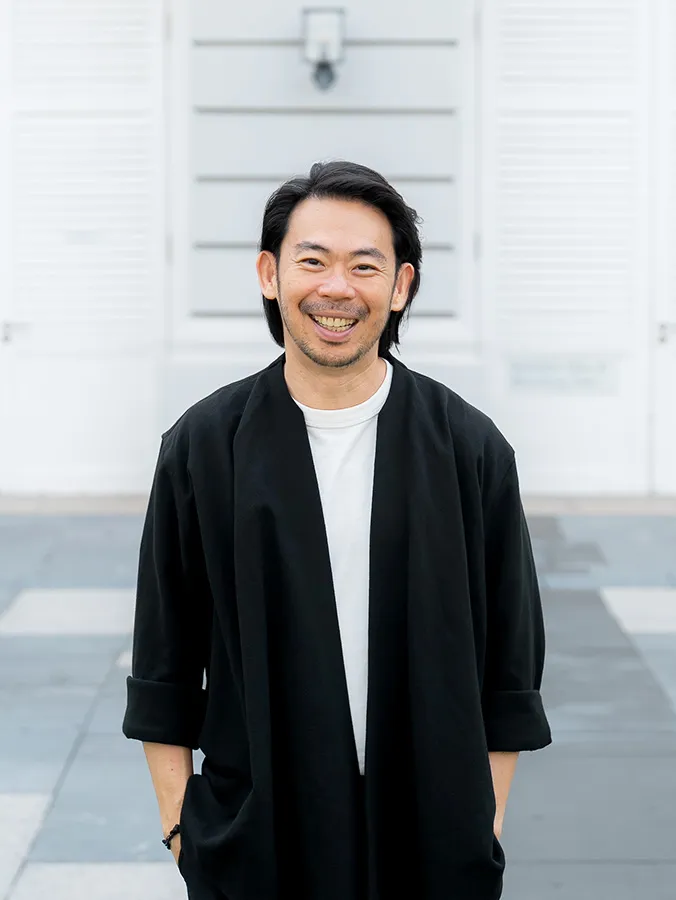
I’m the Founder and Managing Director of Wild & Wise, a strengths-based leadership development practice working with senior leaders and MNCs across APAC. I am also the co-founder of Future.Pro where we work with senior leaders and MNCs across APAC on a future ready workforce.
If this resonates, follow along or reach out directly.
About the Author