I recently revisited one of my favourite films, The Secret Life of Walter Mitty. This time, it landed differently: less like a nostalgic rewatch, more like a mirror for the quiet midlife crisis so many of the leaders I coach are living through right now.
Early in the film, Walter Mitty is mid-conversation with a coworker, nodding along, when the story quietly slips into one of his fantasies, a whole heroic detour playing out behind his eyes, before snapping back to the dull fluorescence of his cubicle. Nothing has actually happened. He hasn't moved. But for a few seconds, he was somewhere else entirely.
If you've ever caught yourself doing something similar at your own desk, rehearsing a different job, a different life, a different version of yourself, you already understand the emotional core of a career rut. It isn't always about hating what you do. More often, it's about going quiet inside a life that used to feel like yours.
The Job That Disappears Around You
Walter Mitty works in negative asset management at Life magazine, a fittingly literal title for a man managing negatives while his own life stays undeveloped. His job isn't dramatic or miserable; it's just fading. The department is being phased out by digitisation, and his competence is quietly becoming irrelevant without him doing anything wrong.
That's a familiar shape for a lot of career ruts I see in coaching rooms. You're not failing. You're not being punished. You're just increasingly invisible: solid work nobody notices, in a role that feels less essential every year. AI anxiety, reorganisations, quiet layoffs of relevance rather than headcount. The discomfort isn't "I'm bad at this." It's "I'm not sure this still matters, and I'm not sure I do either."
When the Job Becomes the Identity
This is exactly the territory we got into on a Wild & Wise episode, "Is the Corporate Job Really Dead?", with Ben I. and Vincent Teo. We kept circling back to how tightly identity gets bound to work, the purpose vacuum left by the pandemic, and the gap between being genuinely productive and merely performing busyness.
That's Walter Mitty's real problem. His job isn't disappearing so much as his sense of self is, so he escapes into a fantasy version rather than confront the question directly. Performing engagement you don't feel and zoning out into heroics are the same move: physically present, quietly checked out.
Daydreaming as an Early Warning Sign
Walter Mitty's fantasies aren't random. They escalate exactly when real life goes flat. Coasting through meetings, drafting a resignation letter you'll never send, imagining a different career while doing the bare minimum in this one: rarely random. It's usually a sign that something in your actual life stopped feeling alive, long before you admit it. The danger isn't the daydreaming itself; it's mistaking it for progress. Imagining a different life can feel like movement. It isn't. It's a placeholder, and it can go on for years if nothing forces the issue.
The Other Side of the Same Trap
Walter Mitty's daydreams pull him upward, into fantasy heroics. In my coaching work with CliftonStrengths®, I see the mirror-image version pull people downward, what I wrote about in "How CliftonStrengths® Can Combat Career Dysmorphia." It's a cognitive distortion, fed by social comparison and hustle culture, that makes your career feel flawed or "behind" no matter what you've actually achieved.
Both are the same underlying problem: measuring yourself against something other than your own authentic definition of success, a fantasy alter-ego, or someone else's LinkedIn post. The fix in both cases is building an internal standard: knowing your natural talents well enough that a good day is measured by whether you got to use them, not by comparison to anyone else, real or imagined.
Ruts Rarely End From Willpower Alone
Walter Mitty doesn't escape his rut through sudden self-motivation. He needs a forcing function: a missing photograph, a deadline, an assignment that requires him to leave the building. The catalyst is external; the change that follows is internal.
Very few of the leaders I coach think their way out of a rut through reflection alone. What moves people is something with a deadline attached: a project with real stakes, a course with a start date, an informational chat already on the calendar. If you're waiting to feel ready, the wait may be indefinite. Manufacture a small forcing function yourself rather than waiting for motivation to show up first.
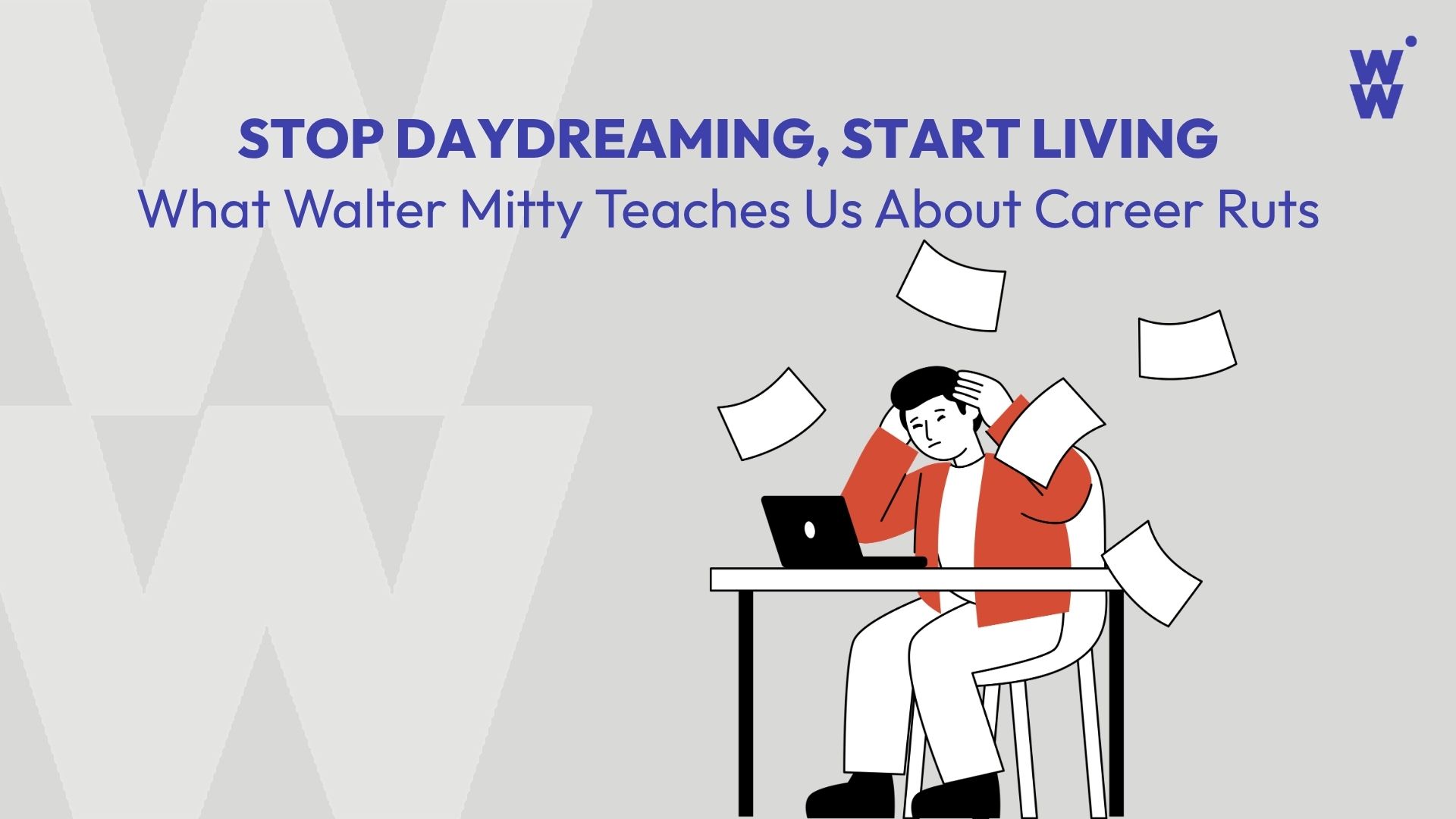
Stop Dreaming, Start Living, With Limits
The film's tagline, stop dreaming, start living, is a clean thesis. The gap between imagining a different career and taking the first real step is where most people get stuck.
But Walter Mitty's resolution, quitting and chasing adventure across dramatic landscapes, is more fantasy than formula. Most people need smaller, repeatable exits:
- Run small experiments before big leaps. A side project or a few freelance hours tells you more than any hypothetical.
- Talk to people already doing what you're curious about. The low-stakes version of Walter Mitty's journey, no flight required.
- Build one visible skill rooted in your natural strengths, rather than emulating a colleague's. Play to what you're actually good at.
- Set a real deadline for one decision. Not "someday": pick one choice and give it a date.
The Takeaway
Walter Mitty is a useful mirror because it dramatises something ordinarily invisible: the slow drift from being present in your own life to narrating an escape from it in your head. The daydreams aren't the problem. Staying in them is.
Whether that drift shows up as fantasy, performative busyness, or career dysmorphia's quiet comparison, the exit is the same: stop measuring yourself against an external or imagined standard, and start building an internal one, one concrete, deadline-shaped step at a time.
You don't need a missing photograph or a trip across the globe. You need one forcing function that makes the next step harder to avoid than to take. That's the real secret life worth paying attention to, not the one in your head, but the one you start building the moment you stop rehearsing it and begin.
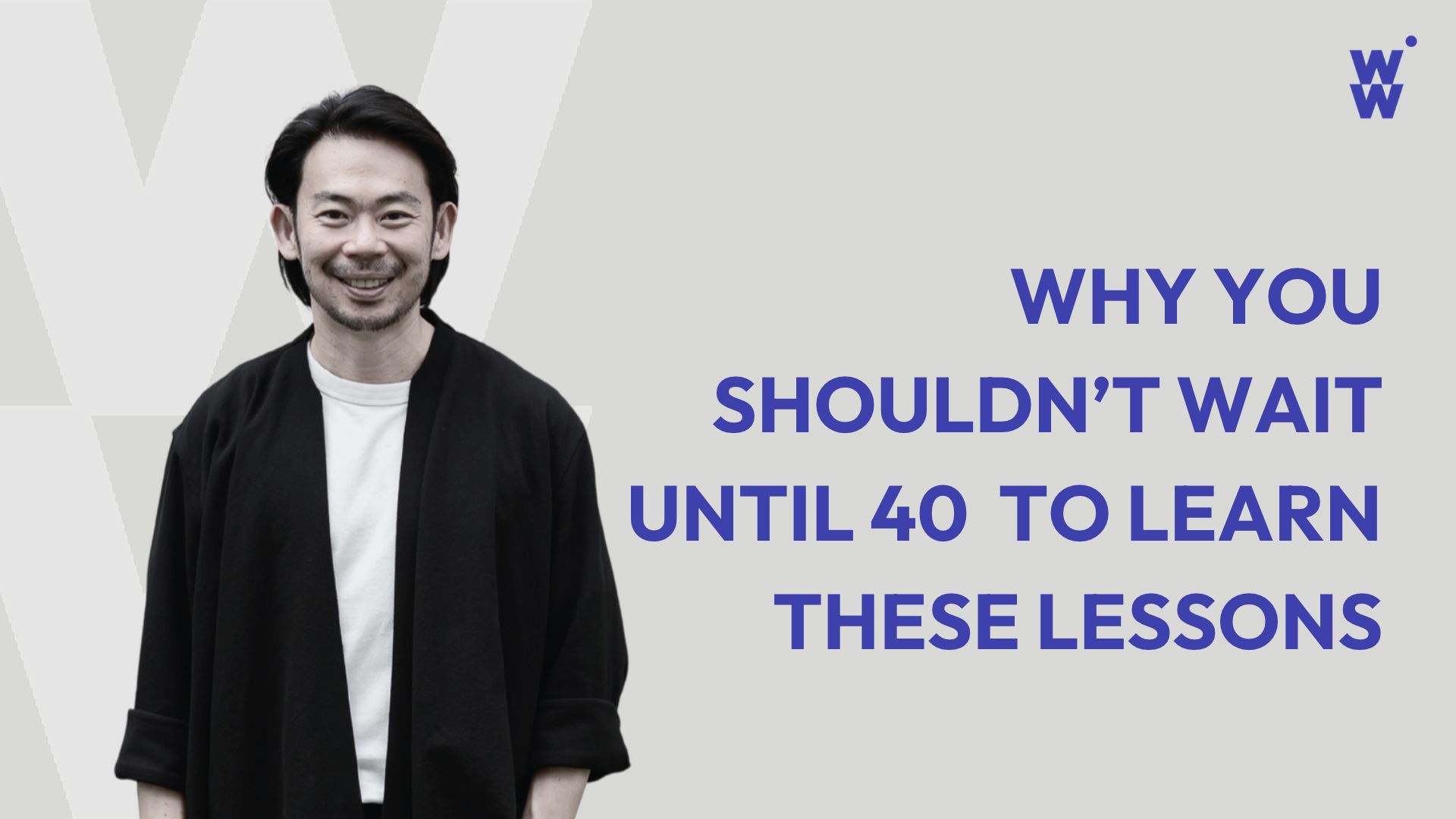
I’m the Founder and Managing Director of Wild & Wise, a strengths-based leadership development practice working with senior leaders and MNCs across APAC. I am also the co-founder of Future.Pro, where we work with senior leaders and MNCs across APAC on a future-ready workforce. If this resonates, follow along or reach out.
About the Author